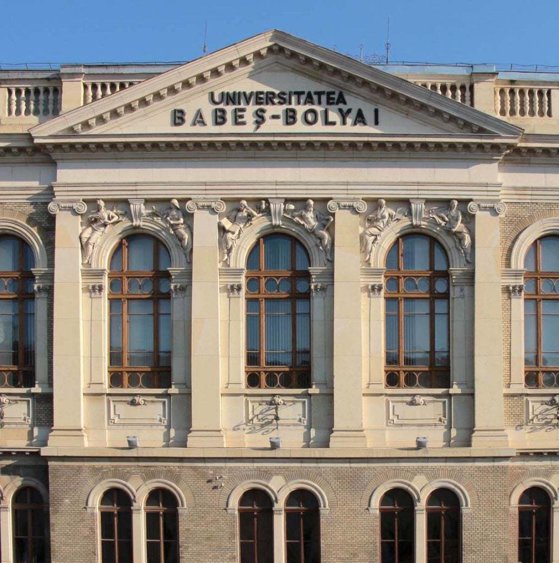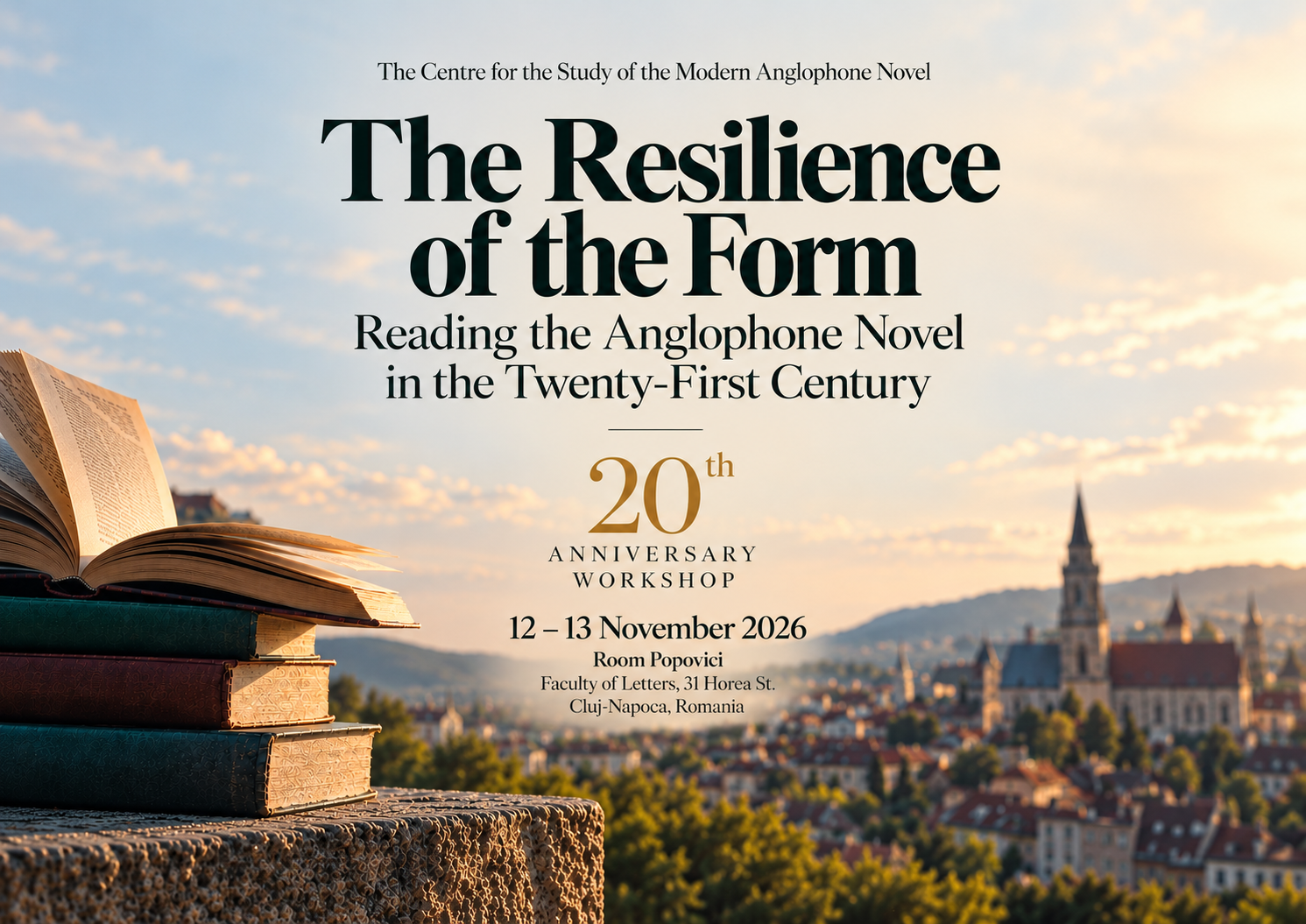
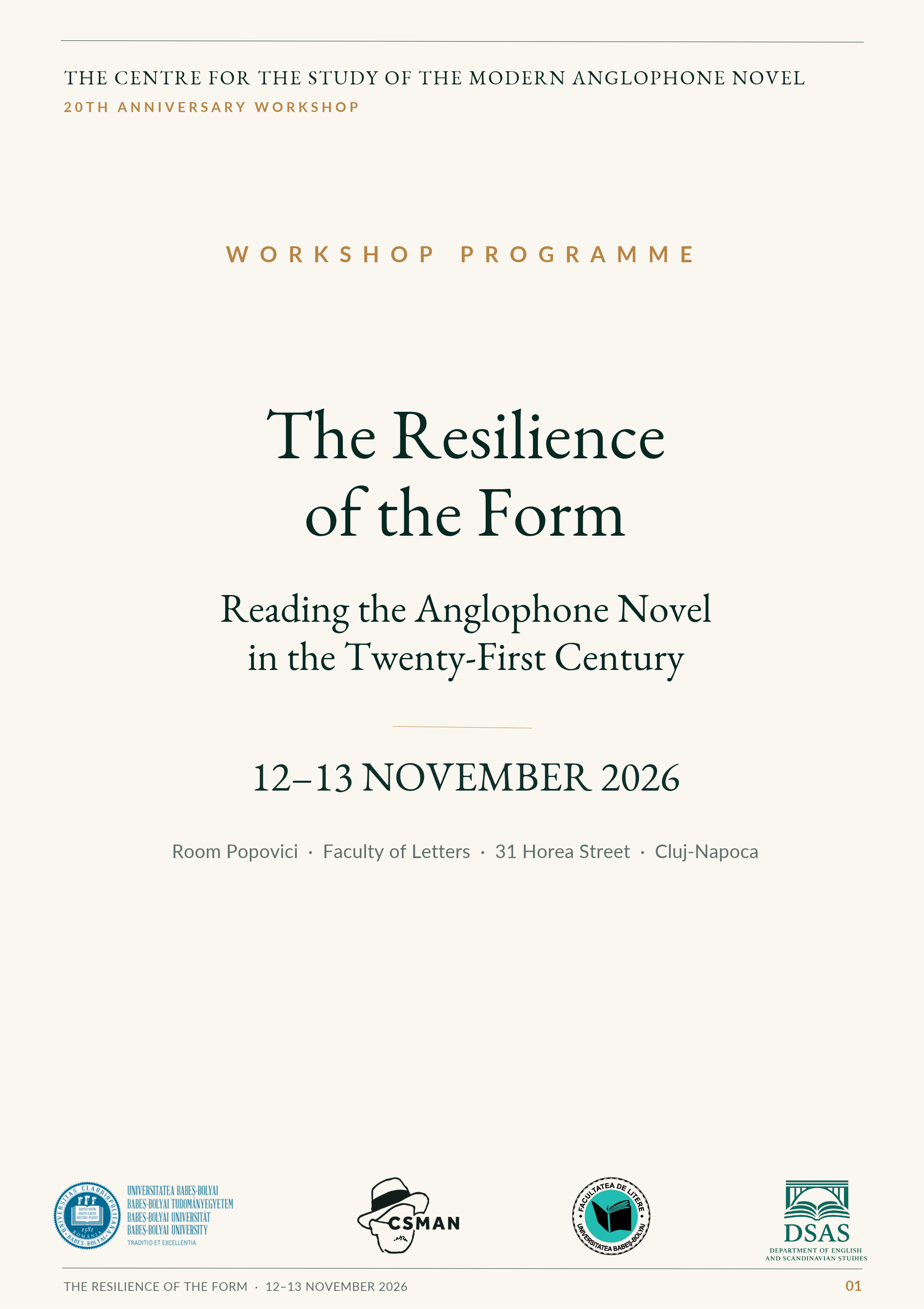
The Centre for the Study of the Modern Anglophone Novel celebrates twenty years of research and scholarly exchange with The Resilience of the Form: Reading the Anglophone Novel in the Twenty-First Century, taking place on 12–13 November 2026 at Babeș-Bolyai University’s Faculty of Letters in Cluj-Napoca. Founded in November 2006 by Professor Sanda Berce, the Centre has since expanded its research across the histories and geographies of Anglophone fiction.
The workshop considers the novel’s continuing capacity for transformation at a time when literary reading faces changing cultural expectations and technological conditions. Its central question concerns how we read novels in the twenty-first century, including works produced in earlier historical periods. Discussions explore formal experimentation, the afterlives of earlier fiction, the circulation of novels across languages and regions, and the shifting practices through which literary works are interpreted and valued.
Bringing together scholarship on older and contemporary fiction, the workshop also examines modes of literary attention, from close reading to computational and AI-assisted approaches. It asks how the novel’s historical forms continue to invite new readings, and what these practices might reveal about literature’s possibilities in the present.
The Centre for the Study of the Modern Anglophone Novel
Workshop Description/Call for Papers
„The Resilience of the Form: Reading the Anglophone Novel in the Twenty-First Century”
Workshop dates: 12-13 November 2026
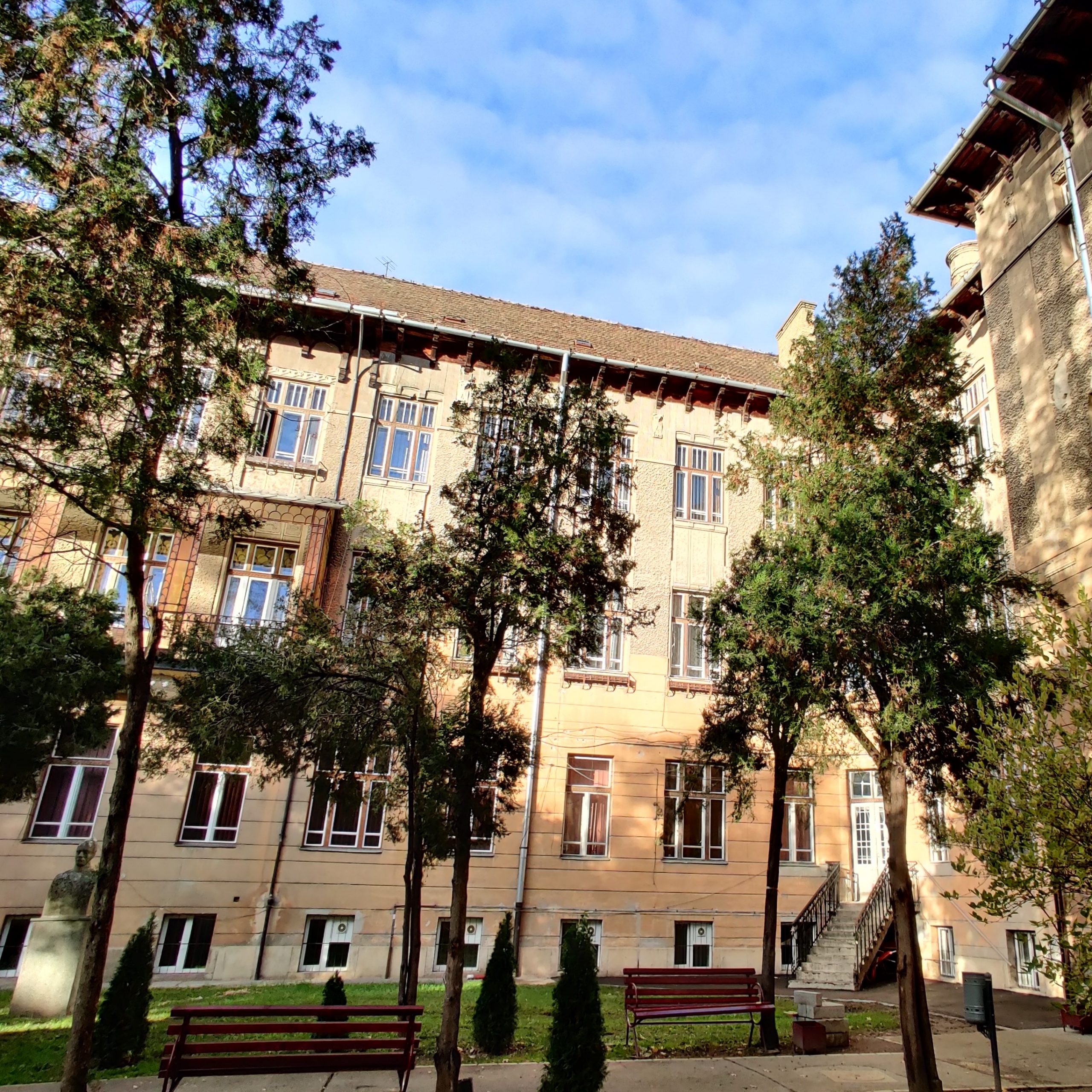
Workshop venue: Faculty of Letters, 31 Horea St., Cluj-Napoca, Romania
CSMAN webpage: https://csman.centre@ubbcluj.ro
The Centre for the Study of the Modern Anglophone Novel, affiliated with the Faculty of Letters of Babeș-Bolyai University, was founded in November 2006 by Professor Sanda Berce as The Centre for the Study of the Contemporary British Novel, and soon became a welcoming terrain for academic debates, for ideas and sketches for research projects or joint publication ventures, as well as for organizing scientific or cultural events. Undoubtedly evidencing the success of the Centre’s proposed mission, the growth of our scholarly community led us to realize that both the intellectual interests of its members, and wider shifts in current scientific priorities, warranted an extension of the historical and geographical ambit of its investigations. Our enlarged focus on the modern histories and contexts of the Anglophone novel involved not only a name change, but also an effective restructuring of our team’s alignment to the latest trends in literary studies. Over the past two decades, the Centre has become a hub for Anglophone studies in Cluj and in Romania, hosting international experts as associate members or visiting guests, and attracting young scholars who are energizing our work in new directions. It is therefore not only befitting, but – we think – also important to mark its twentieth anniversary by hosting a discussion on the persistence of the novelistic genre in the twenty-first century, at a time of seismic change for literature, for the humanities as contributors to societal debate and for the world at large, when the questions of the novel’s readership and of reading practices are met with generalised anxiety.
Addressing ways in which we (still) read novels in the twenty-first century, we follow Peter Boxall’s take on both the “conditions which make literature possible”– the historical and social regimes of visibility and knowledge that prescribe how writing functions – and the possibilities opened up by literature (1), the fresh ethical and cognitive vistas it affords as we face the “near compulsory inarticulacy” (10), as well as the crisis in legibility triggered by the breakdown of legitimating frameworks or by multiple threats of universal extinction. Despite such justified anxieties, we believe that throughout its history, the novel has exhibited a radical capacity to harness the invisible, to challenge rules of reading and summon readerly modes of thought and feeling that illuminate the world’s intelligibility while simultaneously pointing to its limits. Alertness to the novel’s repurposable and renewable potentialities of form entails, as Caroline Levine (7) reminds us, resonating with the ways in which its latent aesthetic “affordances” or capabilities may be activated by pressing sociopolitical arrangements, from climate emergency to global warfare, while dominant patterns are pushed into remission. As the editors of a recent collection emphasise, “historical practices of close reading” perform exercises of attention that could counteract the distraction of the digital age and expose inherent cognitive biases (Thain and Jones 20-21), thus placing the humanities in a privileged position to respond to the collapse of political and social consensus we are witnesses to. Just like attention, reading is not just a solitary act: it requires or subverts collective norms, it is regulated by shared cultural contexts and is often a communal activity. The historical forms of the novel, with its complexity, its varying lengths, and its realization of literature’s “multimodal sensory input” (Thain and Jones 21) are the best qualified to galvanize and rehearse twenty-first century attempts to understand the past, the present and the future.
The discussions (15-20 minutes per presentation, followed by Q&A sessions), will take place within the framework of thematic panels, which could include, but will not be limited to the following topics:
– the experimental potential of the novel form as the foundation of generic continuity/metamorphosis;
– regionality, (semi-)periphery and cultural circulation as the guarantee of novelistic survival and reception endurance in the twenty-first century;
– resurgences of historical novelistic modes in the twenty-first century; anticipating future forms;
– the afterlives and twenty-first-century rereadings of earlier novels: changing canons, new ethical and political frameworks, adaptation, translation, re-edition, digital circulation, and transformations in readership;
– reading the novel (both past and present) at the intersection of politically and ethically “committed” modes of interpretive attention and the current “postcritical” orientations interested in an open and hospitable valorisation of the texts’ affordances;
– close reading against distant, computational, and AI-assisted reading practices, and the changing value of literary attention in contexts shaped by post-truth, disinformation, and generative AI.
Works Cited:
Boxall, Peter. The Possibility of Literature. The Novel and The Politics of Form. Cambridge: Cambridge University Press, 2024.
Levine, Caroline. Forms. Whole, Rhythm, Hierarchy, Network. Princeton and Oxford: Princeton University Press, 2015.
Thain, Marion, and Ewan Jones, eds. Close Reading as Attentional Practice. Edinburgh: Edinburgh University Press, 2026.
Confirmed keynote speakers:
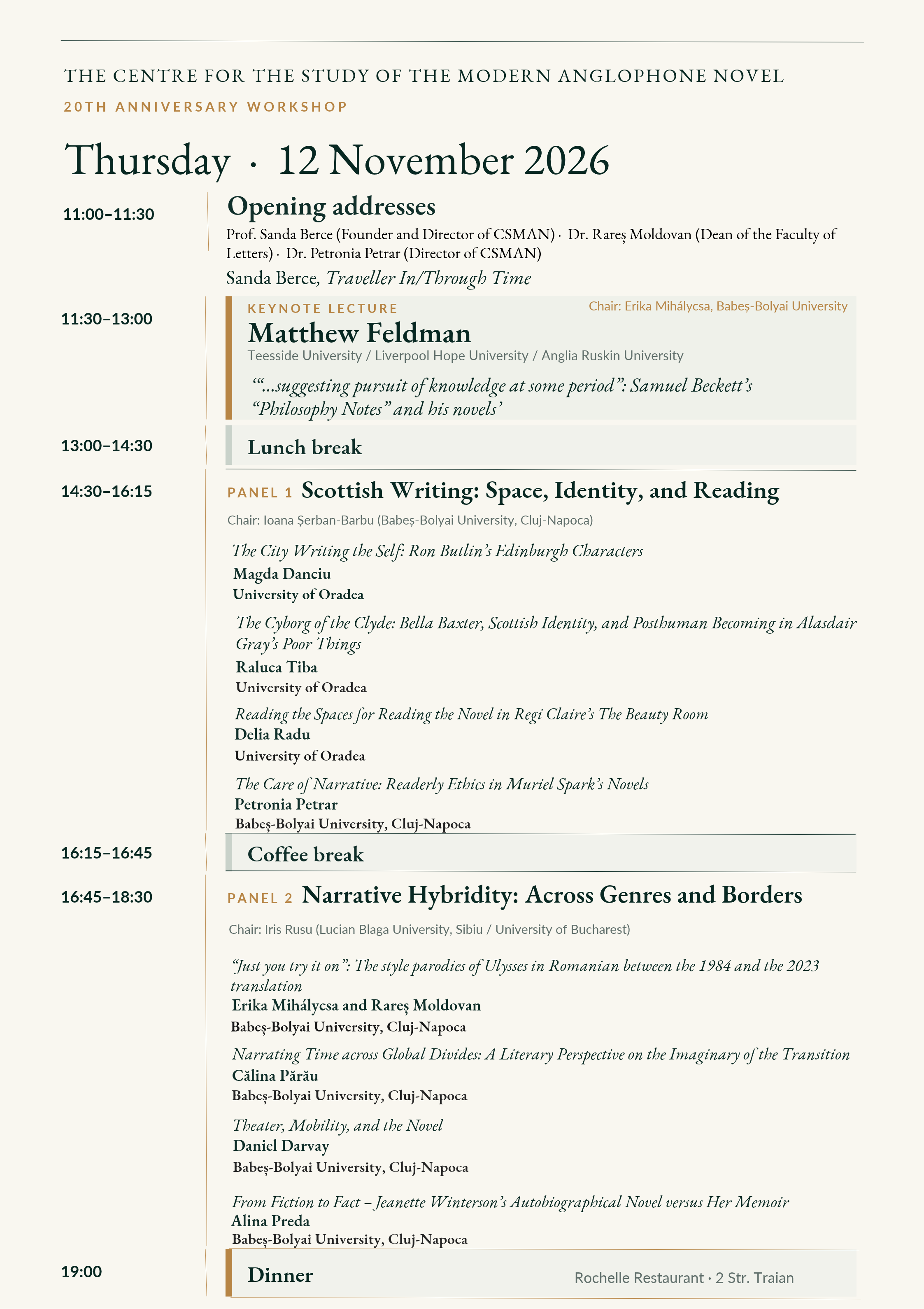
Prof. Matthew Feldman (Teesside University, Liverpool Hope University, Anglia Ruskin University)
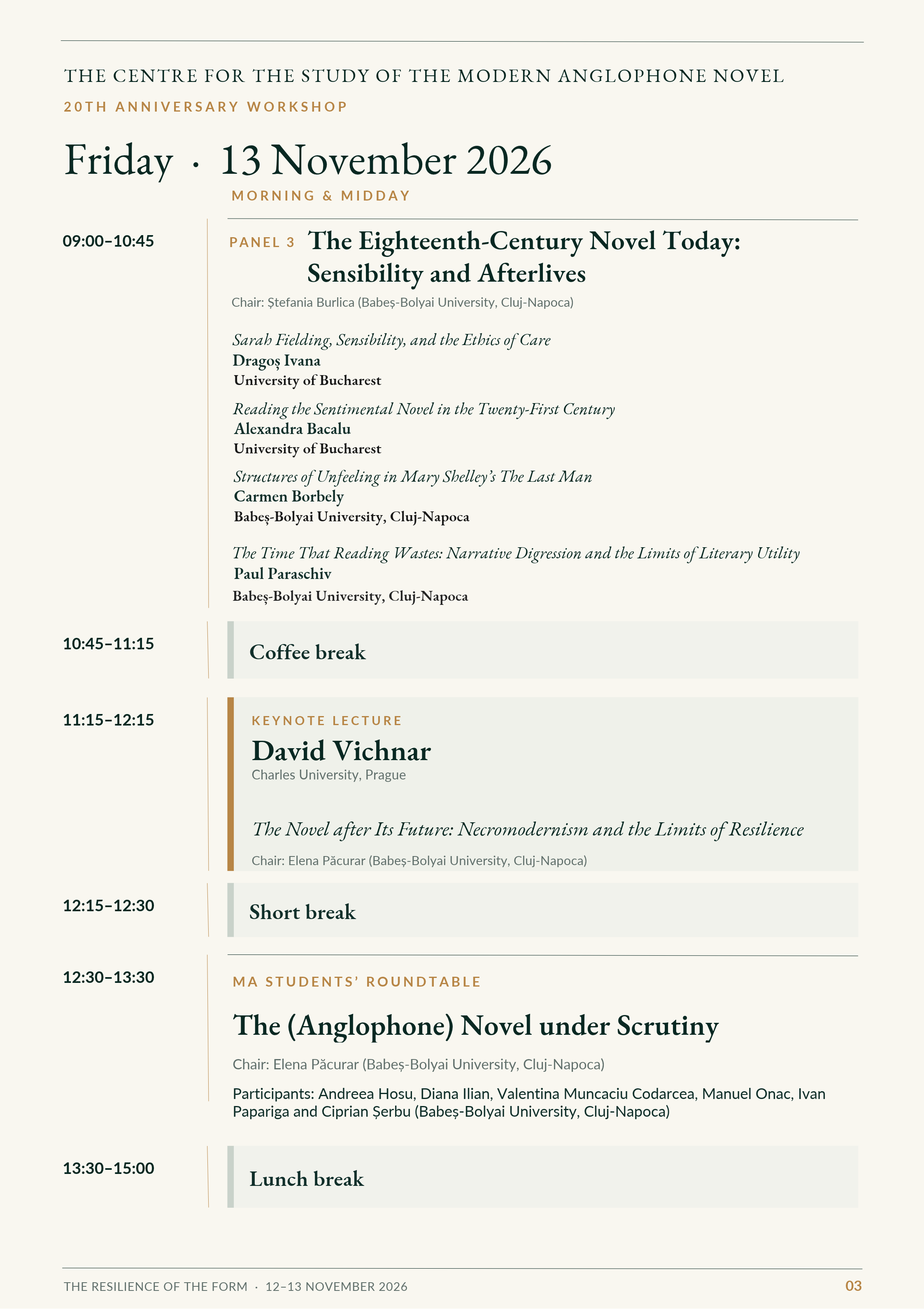
Dr. David Vichnar (Charles University, Prague)
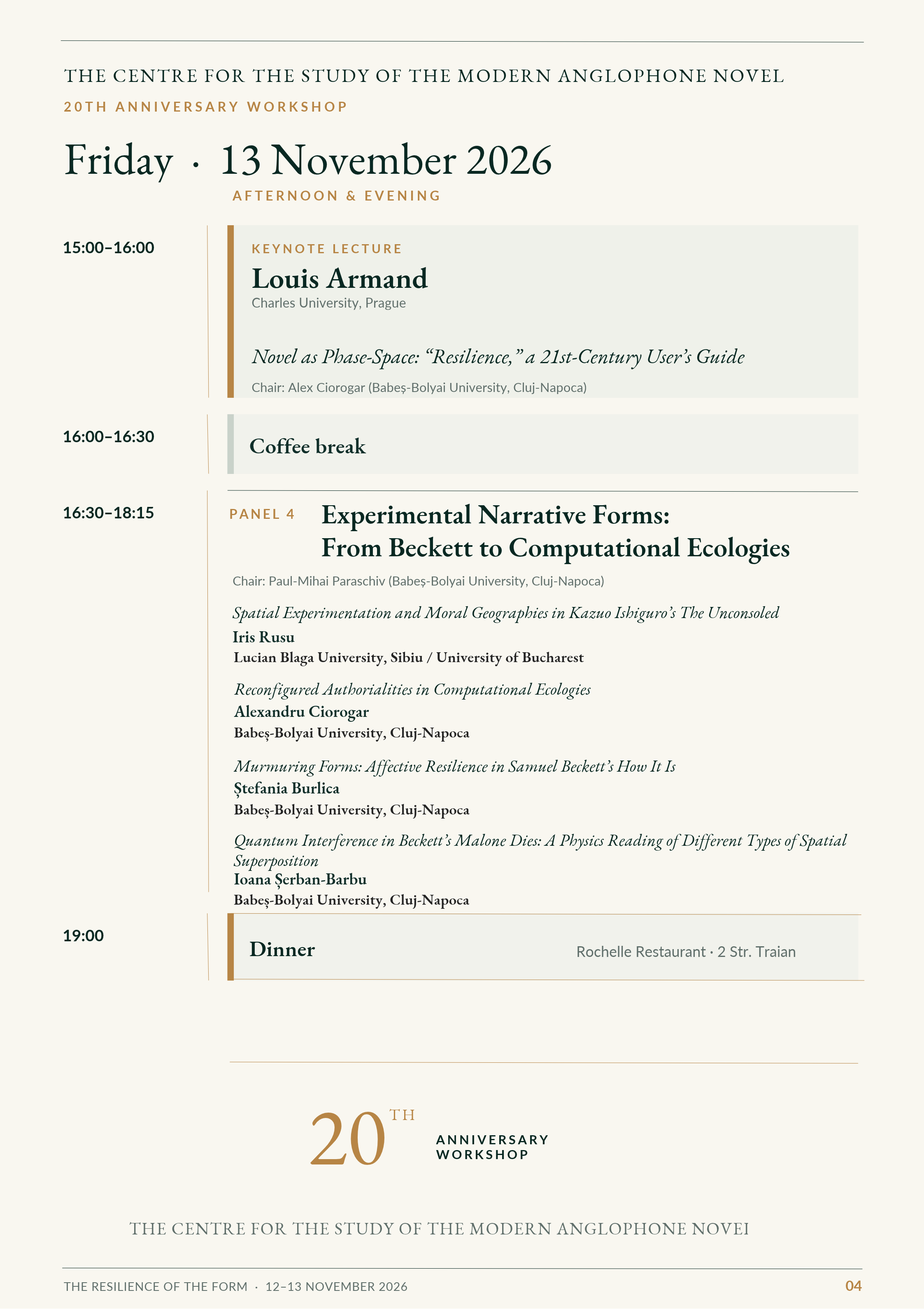
Dr. Louis Armand (Charles University, Prague)
(Forthcoming)
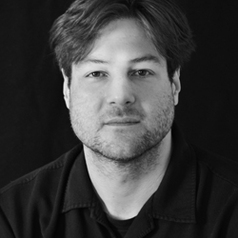
MATTHEW FELDMAN (Teesside University / Liverpool Hope University / Anglia Ruskin University)
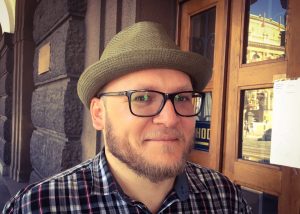
DAVID VICHNAR (Charles University, Prague)
David Vichnar holds a double PhD from Charles University and Université de la Sorbonne Nouvelle, Paris. Apart from lecturing at the DALC, he teaches at ECES and at the University of South Bohemia. He works as an editor, publisher and translator. His publications include Joyce Against Theory (2010), Hypermedia Joyce (co-edited, 2010), Thresholds: Essays on the International Prague Poetry Scene (edited, 2011), Praharfeast: James Joyce in Prague (co-edited, 2012), Terrain: Essays on the New Poetics (co-edited, 2014) and Subtexts: Essays on Fiction (2015). Forthcoming in 2021 with Karolinum Press is The Avant-Postman: Experiment in Anglophone & Francophone Fiction in the Wake of James Joyce, a momental study of 50 post-war writers continuing in Joyce’s avant-garde project under postmodern conditions. He translates into English from Czech (Louis Armand, Snídaně o půlnoci, 2013), German (Melchior Vischer, Second through Brain, 2015) and French (Philippe Sollers, H, 2015). His English translations of contemporary Czech poetry have appeared in Modern Poetry in Translation and online on the Versopolis platform. Vichnar co-organizes Prague Microfestival, an annual festival of the arts, combining contemporary writing with art, film, theory & performance, and manages Litteraria Pragensia Books and Equus Press. His research and teaching areas include James Joyce studies, modernism & modernity, 20th century experimental literature, historical & postwar avant-garde, contemporary fiction, and historical & modern literary theory.
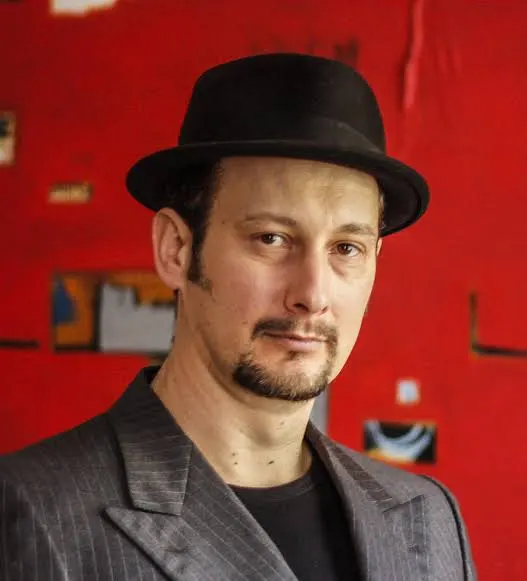
LOUIS ARMAND (Charles University, Prague)
Director of the Centre for Critical and Cultural Theory. His books include Videology (2015), Helixtrolysis (2014), The Organ-Grinder’s Monkey (2013), Event States: Discourse, Time, Mediality (2007), Literate Technologies: Language, Cognition, Technicity (2006), Incendiary Devices: Discourses of the Other (2006), Solicitations: Essays on Criticism and Culture (2005), and Technē: James Joyce, Hypertext and Technology (2003). Edited collections include City Primeval: New York, Berlin, Prague (with Robert Carrithers, 2017), Pornoterrorism: De-aesetheticising Power (with Jaromir Lelek, 2015), Abolishing Prague (2014), The Return of Kral Majales: Prague’s International Literary Renaissance 1990-2010 (2010), Contemporary Poetics (Northwestern University Press, 2007), Pornotopias (with Jane Lewty & Andrew Mitchell), Technicity (with Arthur Bradley, 2007), Avant-Post: The Avant-garde under “Post-” Conditions (2006), Mind Factory (2006), JoyceMedia (2004), Giacomo Joyce: Envoys of the Other (with Clare Wallace, 2002; expanded edition 2006) and Petr Škrabánek, A Night Joyce of a Thousand Tiers (with Ondřej Pilný, 2002). In 1994 he co-founded the online journal Hypermedia Joyce Studies, which he edited up until 2006. In 2008 he founded the Prague Microfestival. He has published numerous volumes of poetry, including Monument (with John Kinsella, 2020), East Broadway Rundown (2015), Indirect Objects (2014), Synopticon (with John Kinsella, 2012), Letters from Ausland (2011), Malice in Underland (2004), Strange Attractors (2003), Land Partition (2001) and Inexorable Weather (2001), as well the novels including The Garden (2001), Menudo (2006), Breakfast at Midnight (shortlisted for 3AM magazine’s Novel of the Year, 2012), Cairo (shortlisted for the Guardian newspaper’s Not-the-Booker Prize, 2014), The Combinations (2016), GlassHouse (2018), Vampyr (2020) and Glitchhead (2021). He is a former editor of VLAK magazine, founding editor of Litteraria Pragensia Books and a member of the editorial boards of Critical Posthumanisms (Brill) and Rhizomes: Cultural Studies in Emerging Knowledge (Washington State University). His work has been included in The Penguin Anthology of Australian Poetry, Best Australian Poems, Poems for the Millennium (vol. 4), Contemporary Australian Poetry, World Poetry in English, Thirty Australian Poets, among others. His critical essays have appeared in 3AM, Unmediated, Alienist, Open Library of the Humanities, CounterText, The New Critique, La Deleuziana, AI & Society, the Journal of Modern Literature, Angeliki, Technoculture, Sci Phi, Symplokē, James Joyce Quarterly, The Symptom, Journal for Cultural Research, James Joyce Literary Supplement, Lola, Jacket 2, Cordite, Semiotica, Irish Studies Review, Genetic Joyce Studies, Culture Machine, TriQuarterly among others. He is a member of the Northern Theory School, University of Lancaster, UK; an associate member of the Centre for Postcolonial Writing, Monash University, Australia; he was a member of the European Network project ACUME2: Interfacing the Arts, Sciences and Humanities; and from 2008-2012 served as a trustee of the International James Joyce Foundation. He has also taught Art History at the University of New York, Prague.
The Faculty of Letters, Babeș-Bolyai University, The Centre for the Study of the Modern Anglophone Novel (CSMAN) and the Department of Anglophone and Scandinavian Studies.
Organising Committee:
Faculty of Letters, Babeș-Bolyai University
Room Popovici
31 Horea Street
Cluj-Napoca, Romania
Useful links: